

Radio, Radio: Rekindling the Thrill of Discovery, and a Sneak Preview for 2026
When I was a kid, my clock radio was everything: A time-travel machine and a lifeline. But when I took it apart, I killed it. Here are some stories I'll be chasing—hopefully not to death!—in 2026.

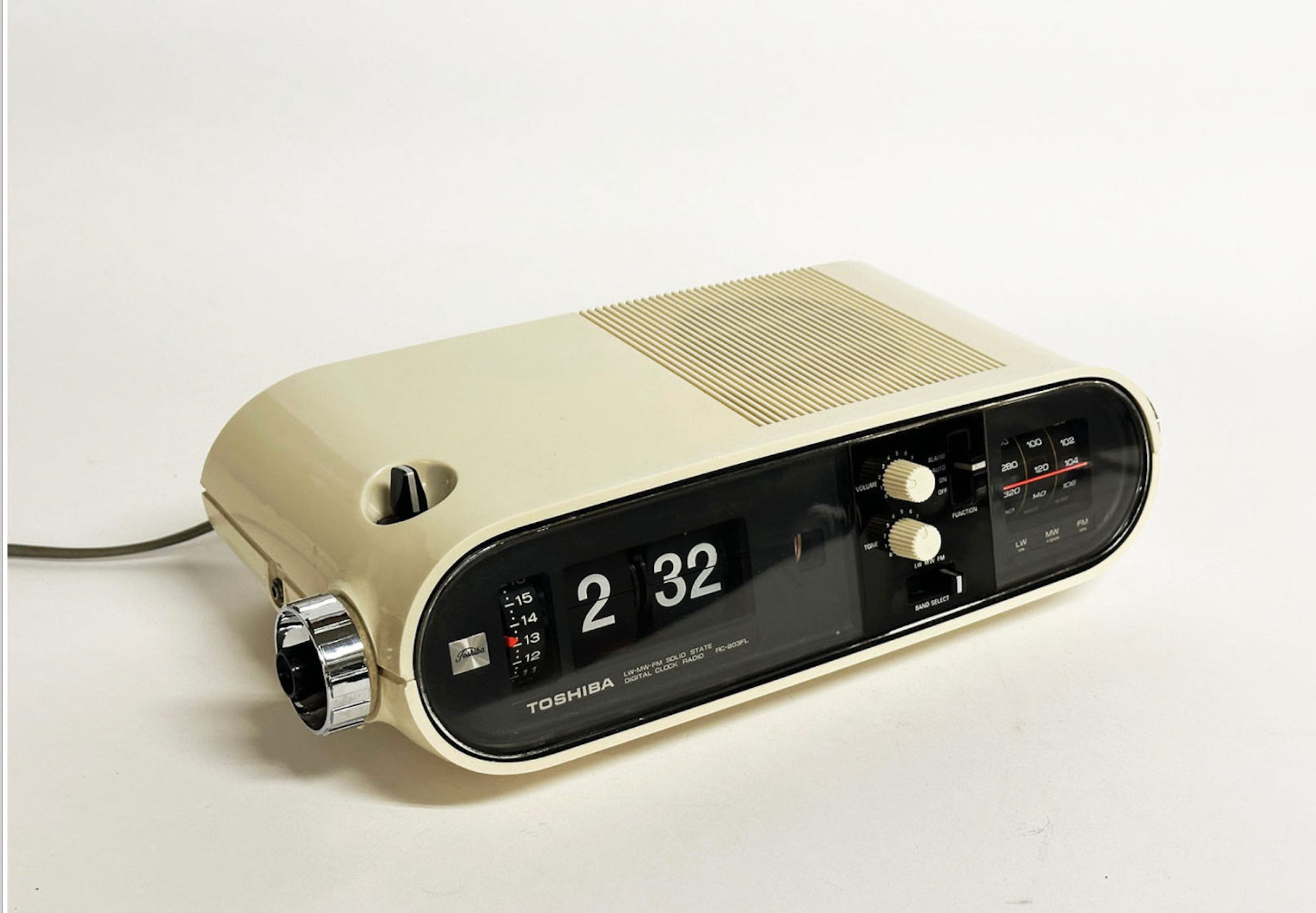
I don’t know where the radio came from; somehow, it was always just there.
It was a classic piece of ‘70s design, that clock radio. A Toshiba 803F, all sleek plastic and Plexiglas. And it saved me. When I felt friendless and alone, which was basically all the time, I’d switch it on and twist the knurled dial, probing the airwaves for signs of life. The problem was that back then, there wasn’t much to be found. Foreigner was hot blooded and they needed someone who did more than dance. The Bee Gees wanted a girl who was, somehow, more than a woman.
But when certain songs came on—songs like “I Can’t Explain” and “I Feel Fine” and “Pictures of Matchstick Men”—they seemed to leap from the pressed-paper speaker, nailing me to the spot. This music, beamed not just through space but seemingly through time, was proof of life outside the walls of our hermetic household, a beacon guiding me to something—anything—better than this.
I didn’t understand the mechanics of sound, how an electric guitar could drive an amplifier to the edge of feedback and beyond, or the way magnetic recording tape could compress music and lend it a nearly liquid quality. All I knew was that these songs were pushing on a membrane deep inside me, the thing that kept me separate from the world outside.
Eventually, I’d learn there was music I couldn’t hear on the radio—a lot of it, actually—and that behind it were unseen people writing, playing, recording and producing it, as well as inventing and building and tinkering with the instruments and gear that made it all possible.
I had to know more.
Old Habits Die Hard
Unfortunately, that curiosity was the Toshiba’s undoing. When the clock portion of the clock-radio went on the fritz I took the thing apart. How hard could it be for a 9-year-old to fix a clock, anyway? And that, as they say, was the end of that.
Or was it? All these years later, I still love figuring out what makes things tick. And in a nutshell, that’s the guiding principle of this Substack: To pry open the music I love just enough to understand how it works—without, of course, killing the magic inside.
If you’re reading this, I’m guessing music matters to you, too—a lot. And I’m guessing it’s the sounds you picked up on in your teenage years that matter most. If so, congratulations! You’re in good company. According to a recent study from the University of Jyväskylä, it’s the music we absorb from roughly ages 13 - 20 that has the greatest effect on us throughout our lifetimes. For me, that happened to be music from the punk, hardcore, new wave and ‘60s revival scenes.
All these years later, I’ve gone from playing it to writing about it. I love it when something I share helps rekindle that spark of discovery in others. And with that in mind, here’s a little bit of what I’ve got planned for 2026.
Untold Stories About Unheard Music
Feel like all the stories about “lost albums” have already been told? Not if I have anything to do with it! In 2026 I’ll be embarking on more deep dives into forgotten artists and their work, as I did previously for Washington, D.C.’s legendary (and legendarily debauched) 9353 and the tangled story of how the multitrack reel for The Stooges’ classic Raw Power made it back to Iggy Pop (or did it?).
Deep Dive Conversations
Look forward to more in-depth conversations with musicians, archivists, and all the others who help make music meaningful. Past examples include this unexpectedly revealing interview with Unwound and the story of Naomi Petersen, the punk photographer who captured iconic shots of everyone from Nirvana to Minutemen to Guns n’ Roses but then faded away far too young.
Sound Surrounds
A new feature here at Dispatches From the Fringe, this semi-regular column engages with noteworthy musicians on a very specific question: How did “non-musical” sounds influence and expand your understanding of music? I promise: The answers—whether it’s the crunnnnch of gravel driveways or the whooooosh of early jet planes—will surprise you!
That’s it! Most of all: I hope that what I share fires your curiosity, even inspires you in some way. Thanks for coming along with me on this ride!
Love always,
Seth
"Feel like all the stories about “lost albums” have already been told?"
Not me. I'm looking forward to seeing what you've got cooked up for us!
You mentioned The Bee Gee’s, maybe you know they wrote 'Night Fever' in a cab to the beat of the sections of The Brooklyn Bridge passing under the cab's wheels as it moved? Does this fall under that category you’re going to explore? If not, it’s definitely a close relative to music inspired by non-music sounds.